
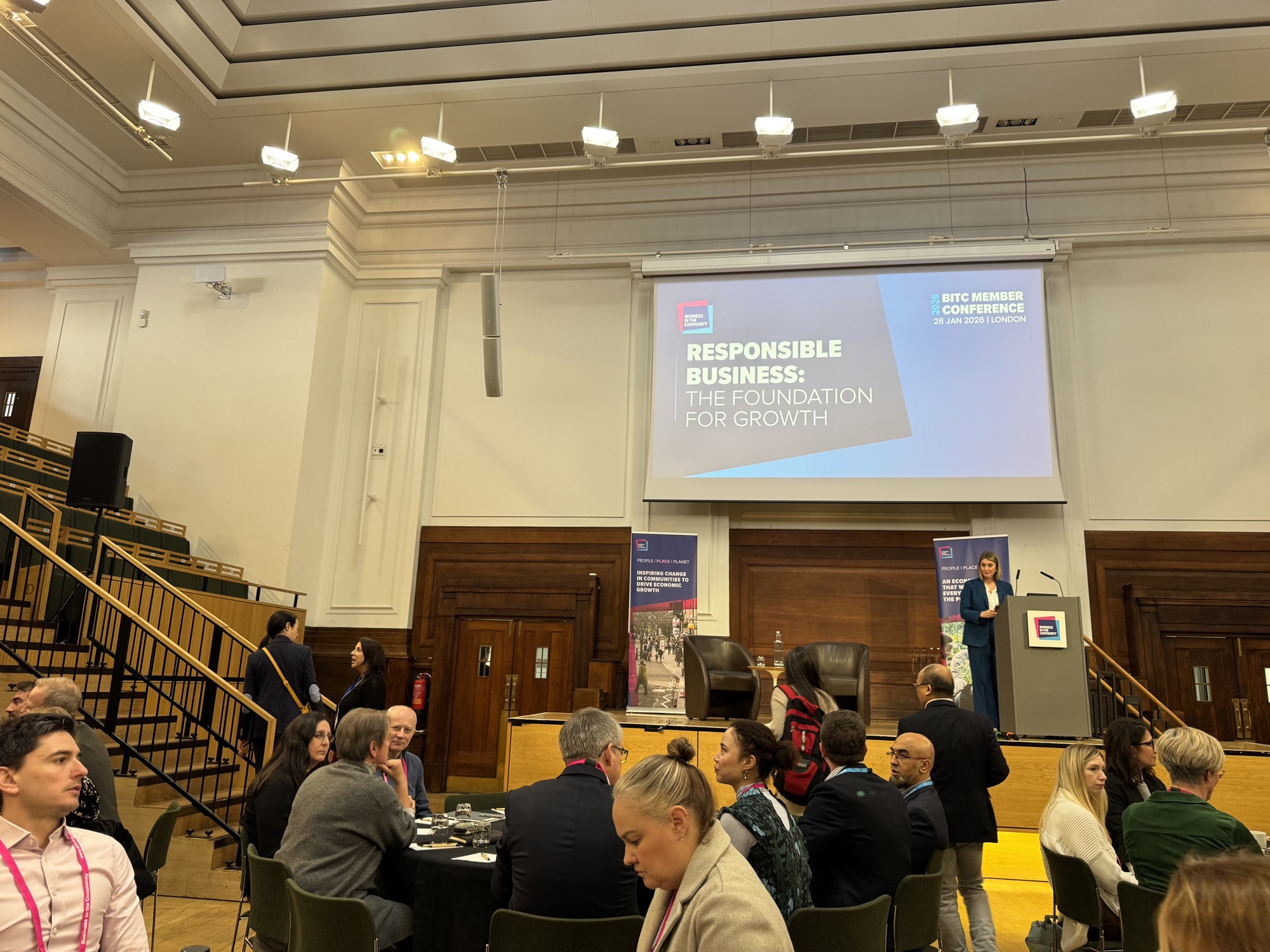
My takeaways from the BITC Members Conference 2026
Earlier this year, I attended the BITC (Business in the Community) Members Conference on 28th January 2026.
Hosted by Sarah Travers and attended by a wide variety of BITC members, the conference established a clear theme: responsible business is no longer a peripheral activity, but an essential foundation for sustainable growth.
The State of the Journey: Scaling for Impact
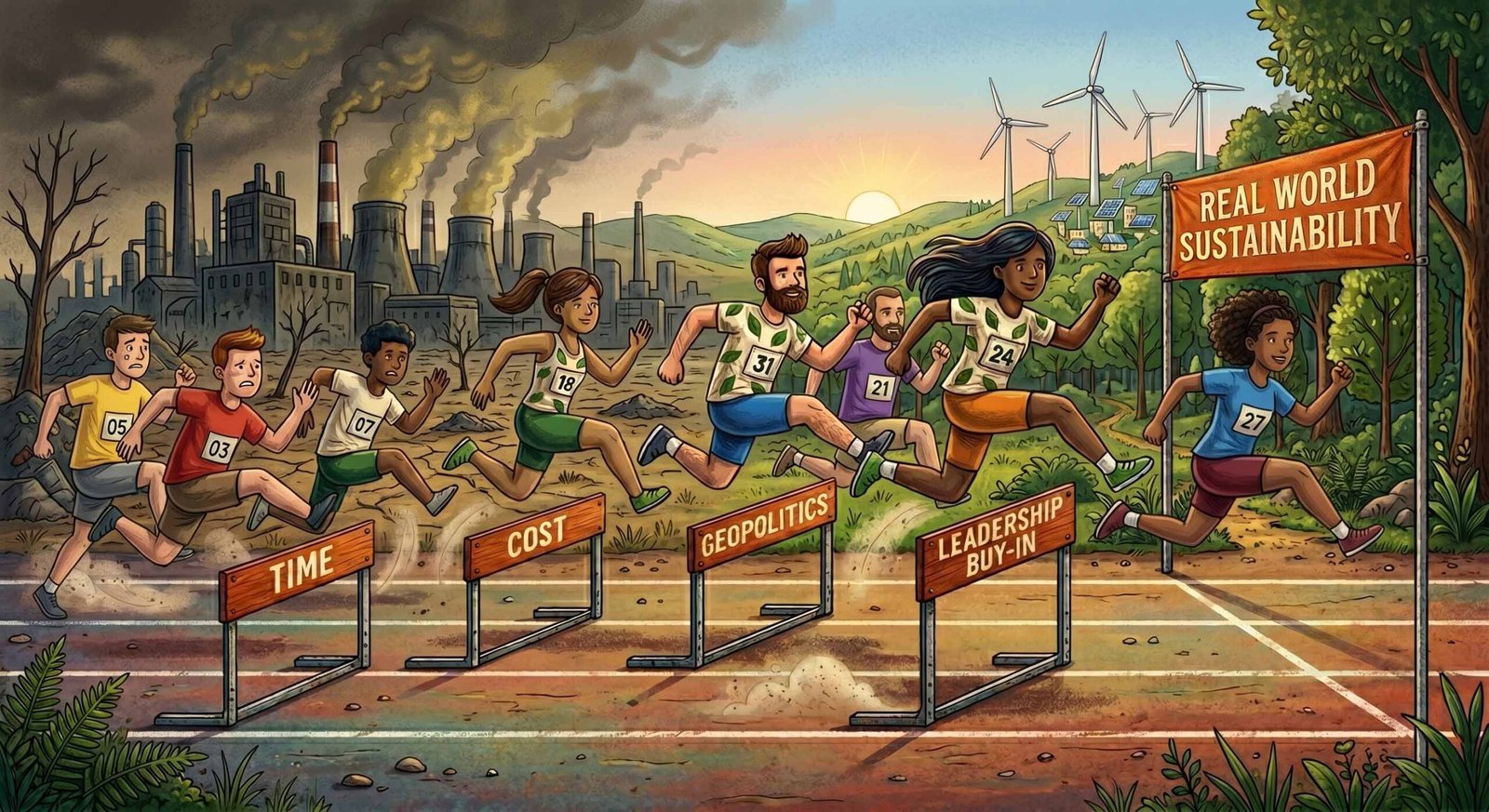
The day opened with a live poll, revealing that the majority of attending organisations are well into their journey, with 41% of members identifying as “scaling impact,” while 30% are “embedding into strategy.” However, significant barriers remain. A collective word cloud identified Time, Cost, Geopolitics, and Leadership Buy-in as the primary hurdles to achieving real impact today.
Kieran Harding, acting Chief Executive of BITC, shared insights from the State of the Nation report. After interviewing CEOs of mature companies, the consensus was clear: despite global uncertainty, responsible business remains the bedrock of future growth, particularly in addressing the most critical area: skills and the future workforce.
Polarisation and Public Trust
A breakout session featured Joanne Vazquez-Kirby (Global DEI Lead, Skyscanner) and Shannon Rivers (Director of Inclusion & Wellbeing Advisory, BITC) discussing how to act in a way that retains public trust.
The session introduced “The Trust Lens: A Framework for Values-Led Decision-Making“. This framework asks businesses to reflect on five areas when making decisions on addressing polarising issues (summarised in my own words below):
- Do decisions align with your stated purpose and values?
- Whose trust do you gain or lose by staying silent or speaking out?
- Are we acting consistently and with credibility?
- Have we considered a worldwide audience of different cultures?
- Are we able to articulate our decision and would it stand up to challenge?
In addition to the areas above, companies must consider how and if they communicate: Joanne shared an example of a challenge faced by Skyscanner due to a public misunderstanding in relation to its Pride network. Historically, the Pride network had sponsored Pride marches ever year, however in 2025, decided to support an LGBTQ+ charity instead, as this was deemed to have a greater impact. When this was noticed, there was backlash as a summary judgement was made on the withdrawal of sponsorship. The decision not to sponsor the event was judged out of context as interested parties were not aware Skyscanner was continuing to support the LGBTQ+ cause. The lesson: consider how actions may seem in absence of the big picture and whether proactive explanation is necessary.
There was wider discussion on whether companies should speak out on issues such as the geopolitical issues. There was a shared feeling that this depends on the expectations and viewpoints of the stakeholders, where in some instances, speaking out could erode trust, whilst in others, the opposite is true.
What does ‘Equitable Growth’ mean?
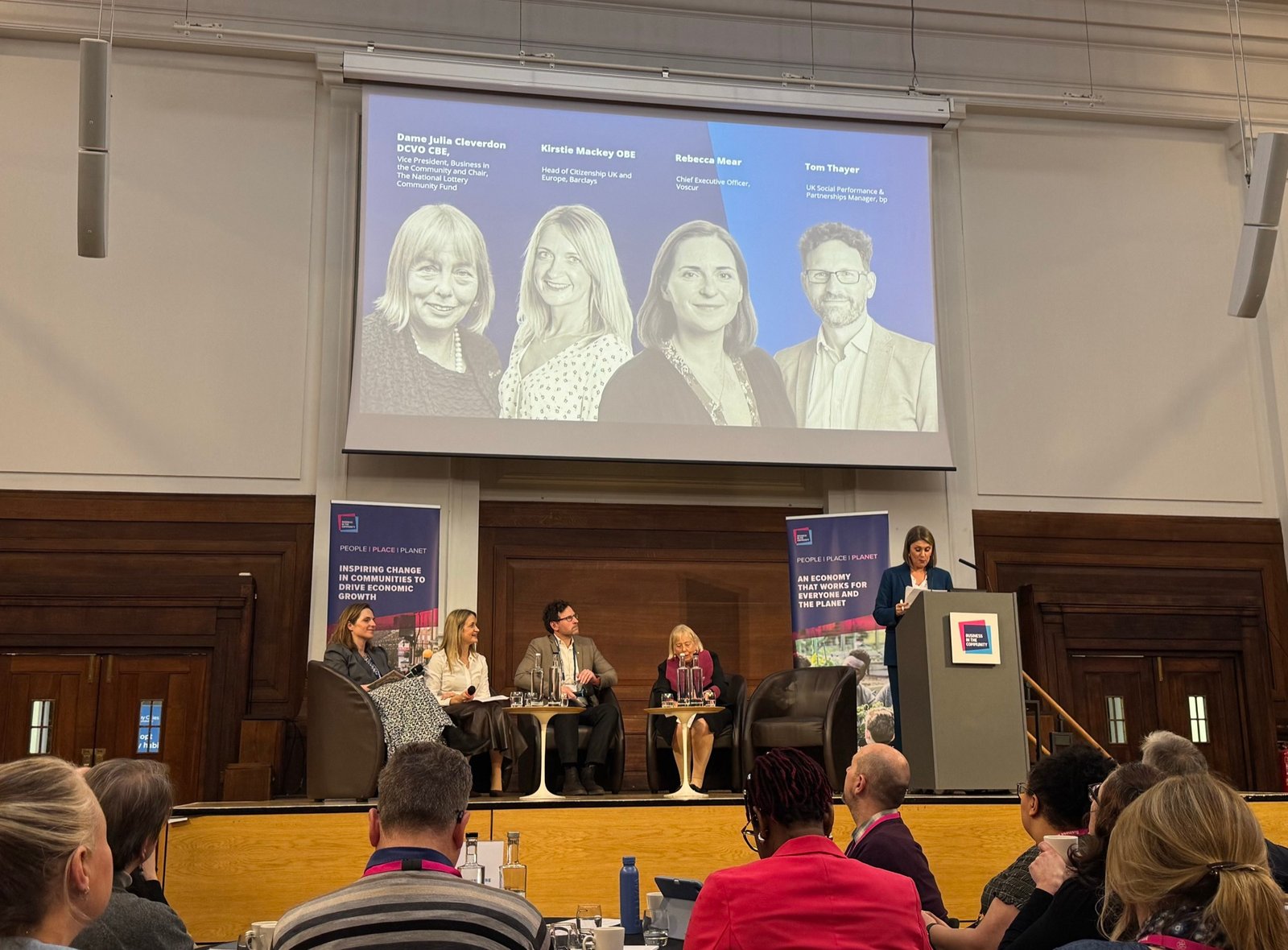
The afternoon panel featured
- Dame Julia Cleverdon DCVO CBE (Vice President, BITC)
- Kirstie Mackey OBE (Head of Citizenship UK and Europe, Barclays)
- Rebecca Mear (Chief Executive Officer, Voscur)
- Tom Thayer (UK Social Performance & Partnerships Manager, BP)
My key takeaways from the panel included:
- Dame Julia Cleverdon DCVO CBE: Highlighted the continued relevant of Former Marks & Spencers chairman, Marcus Sieff’s phrase, “Prosperous high streets require prosperous back streets.”. She spoke of her extensive work in helping business and communities to collaborate in the poorest and most vulnerable areas.
- Kirstie Mackey OBE: Equitable growth is helping people to participate in the economy. A major concern for UK growth is that only 1/3 of businesses believe 17-18-year-olds currently possess the necessary skills. Kirstie highlighted Barclays’s work in helping people participate in the economy by building life skills for work and then placing them into jobs.
- Rebecca Mear: Equitable growth is growth that benefits everyone. We should trust and enable communities on the ground to design what works well for them. Data from Voscur indicated that 65% of UK communities are more likely to trust businesses that invest in them, and 87% are more likely to purchase from those brands.
- Tom Thayer: Equitable growth means reaching the broadest audience possible with the resources available. Tom Thayer discussed Teesside, where BP is creating a foundation for skills development in the community local to a power station it was constructing.
Moving Forward: Three Priorities
The session concluded by setting three top priorities for the year ahead:
- Authenticity: Being credible about actions to combat greenwashing.
- Scaling and Measuring Impact: Moving from pilot programs to systemic change.
- Shared Strategic Alignment: Building trust by aligning what the community needs with what the business needs (e.g., skills).
British businesses must stop shying away from communicating impact. By telling the “stories behind the stats”, such as an individual whose life was changed by an apprenticeship, companies can move from being “individual heroes” to a collective force for good.